
A compassionate space to heal and reconnect.
Jennifer Garrido Santos, MA, LMFT, LICSW
Therapist | Specializing in Trauma & Relationships


Trauma, Relationships, and Healing
Trauma
Sometimes trauma comes from a single overwhelming experience—an accident, loss, violation, or moment that changed how safe the world feels. Other times, it develops more quietly over time through relationships or environments where you felt unseen, unsupported, misunderstood, or left carrying too much on your own. These experiences can leave you feeling constantly on edge, emotionally exhausted, shut down, or disconnected from yourself and the people around you. You may notice yourself falling into patterns that once helped you cope or survive, but no longer feel aligned with the life or relationships you want now. Some people experience these struggles alongside neurodivergence, sensory overwhelm, masking, burnout, or simply feeling out of step with the pace and expectations of the world around them.
Relationships
Relationships shape how we experience safety, connection, trust, and belonging throughout our lives. Early relationships, family dynamics, cultural experiences, and attachment patterns can all influence how we handle closeness, conflict, communication, and emotional intimacy as adults. Over time, relational patterns can leave people feeling unseen, emotionally disconnected, overly responsible for others, fearful of conflict, or unsure how to express their needs without guilt or overwhelm. These experiences can show up in marriage and partnership, family relationships, friendships, parenting, caregiving, and community. Some clients come to therapy during periods of significant change—grief, relationship shifts, health concerns, identity changes, or simply a growing awareness that something no longer feels sustainable or connected.
Healing
Therapy can offer a space to slow down, feel more grounded, and begin reconnecting with parts of yourself that have been carrying too much for too long. In our work together, I bring a steady, compassionate approach that honors your nervous system and the pace that feels right for you. My practice is inclusive of men, women, trans, nonbinary, and gender-diverse clients from a wide range of cultural, relational, and lived experiences. I want therapy to feel like a space where you do not have to over explain yourself or hide parts of who you are. Healing often happens gradually—through safety, insight, connection, and the experience of being deeply understood. Over time, many people find themselves feeling more present, more connected in their relationships, and more able to move through life with clarity, self-trust, and a stronger sense of wholeness.
The Meaning and Mission of “Edme”
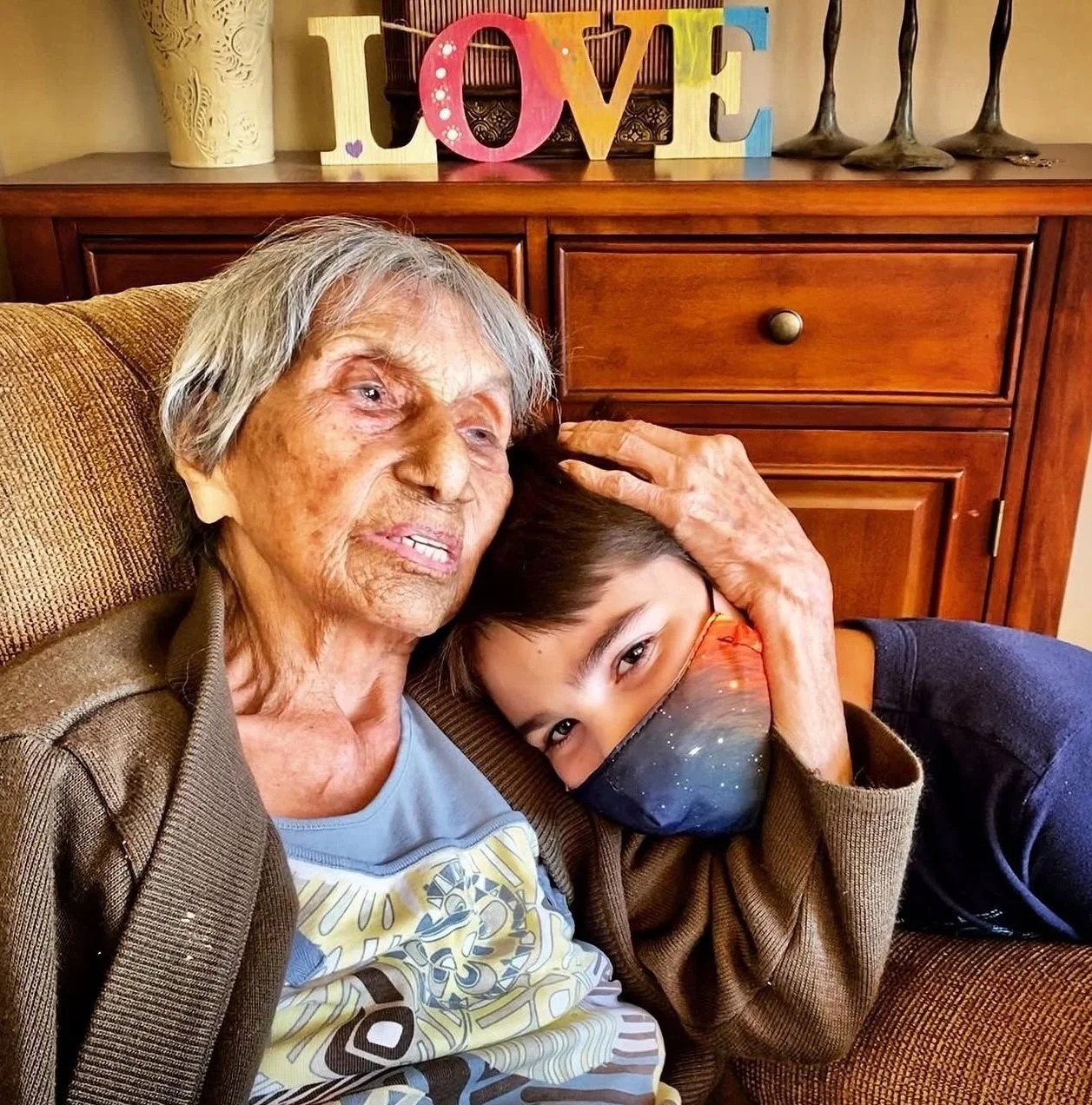
“She just holds me like she knows me. We are connected.”
My son Joshua said this the very first time he met my grandmother—a moment captured in the photo above.
The name Edme comes from her—a Puerto Rican woman with indigenous roots whose resilience, warmth, and presence deeply shaped our family across generations. Her story became part of the inspiration behind this practice.
I believe healing often begins in relationships where we feel deeply seen, understood, and safe enough to be fully ourselves. The experiences we carry are shaped not only by our individual lives, but also by family, culture, identity, and what is passed through generations. In that same way, healing and connection can be carried forward too.

Areas of Focus
Stress, Trauma, and Healing
Complex Trauma, PTSD
Chronic Stress and Burnout
Anxiety and Nervous System Overwhelm
Dissociation and Disconnection
Abuse Recovery
Grief and Loss
Addiction Recovery
Identity, Culture, and Belonging
Neurodivergence, Autism, ADHD - Across the Lifespan
Cultural and Racial Identity
Bicultural and Generational Experiences
LGBTQIA+ Experiences
Adolescents and Young Adults
Midlife, Aging, and Later-Life
Life Transitions
Relationships and Family
Marriage and Partnership
Parent-Child Dynamics
Communication and Conflict
Attachment and Relationship Patterns
Caregiving and Family Roles